DCMS's International Cultural Heritage Protection Programme
The UK is a world leader and innovator in cultural heritage protection and has taken concrete steps to safeguard some of humanity’s most valued cultural heritage.
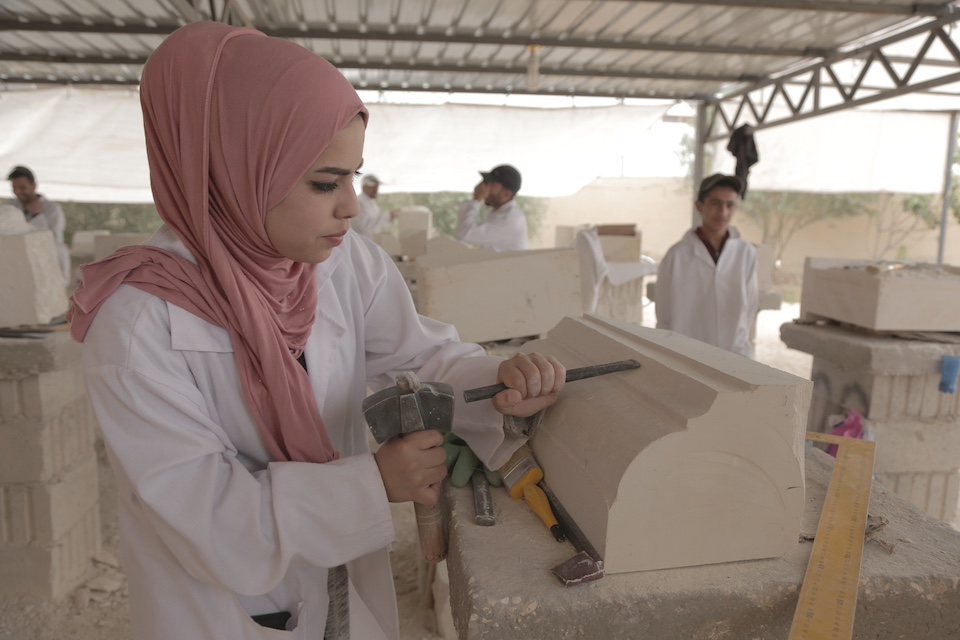
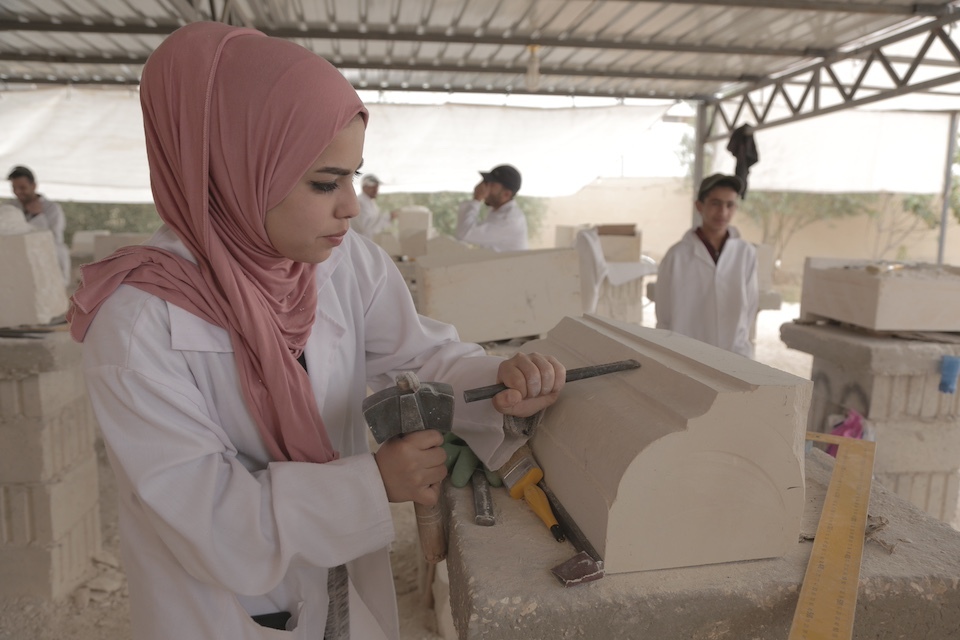
World Monuments Fund© Syrian Stonemasonry Training Scheme Project; Stonemasonry student undertaking training at Mafraq, Jordan.
Introduction
The UK is a world leader and innovator in cultural heritage protection, both tangible and intangible, and recognises its critical role in tackling some of the most pressing issues facing the global community today. Following the deliberate looting and destruction of cultural assets by Daesh (Islamic State) as a tool of war in the Middle East and North Africa, the UK has taken concrete steps to safeguard some of humanity’s most valued cultural heritage.
Since 2015 the Department for Culture, Media and Sport (DCMS) has worked with partners including the British Council, the Arts and Humanities Research Council, UNESCO, the Organization for Security and Co-operation in Europe, the Victoria and Albert Museum and the British Museum to deliver cultural heritage projects in ODA eligible countries across the Middle East, North Africa, East Africa, Southeast Asia and Eastern Europe.
In addition to promoting economic development, culture plays a role in peacebuilding, security and stability, as well as building resilience to crises in fragile and conflict-affected States. This highlights the vital role that protecting culture and cultural heritage plays in the UK’s international development agenda.
Objectives
Through a portfolio of delivery partners, the International Cultural Heritage Protection (ICHP) Programme works across 4 integrated themes to ensure the protection of cultural heritage: conflict and security, climate change, serious and organised crime, and research.
Conflict and security
The conflict and security strand seeks to deliver cultural heritage protection activities that focus on stabilisation efforts, peacebuilding, and sustainable growth in countries affected by conflict. This area also incorporates the UK’s obligations under the 1954 Hague Convention for the Protection of Cultural Property during Armed Conflict and its Two Protocols (1954 and 1999).
Climate change
Launched in 2019, the climate change strand delivers groundbreaking programmes on protecting cultural heritage at risk from climate change and/or natural disasters, building climate resilience and disaster-preparedness capacity in ODA-eligible countries.
Serious and organised crime
The illicit trafficking of cultural objects by serious and organised crime (SOC) actors is intrinsically linked with conflict and climate insecurity. The ICHP Programme works with delivery partners to build capacities of key stakeholders in ODA eligible countries to help detect and mitigate the trafficking of cultural property, while also contributing to the improvement of investigative capabilities and cross-country communication.
Research
Established in 2020, our research strand focuses specifically on funding exploratory projects which further our understanding of the connection between cultural heritage protection and climate change. The ICHP Programme fosters a strong connection with researchers to enhance DCMS’s policy development in this field.
Delivery partners
The UK’s international cultural heritage protection initiatives are delivered primarily through specialist programmes overseen by DCMS. All programmes prioritise engaging with local communities, building capacity and creating opportunities for long-term sustainable growth, ensuring diversity and inclusion remain at the forefront of programming. All programmes are aligned with the UK’s overseas development objectives and conform to strict guidelines on overseas development aid spending, achieving value for money and ensuring the promotion of the economic development and welfare of developing countries by safeguarding cultural heritage at risk.
The British Council - Cultural Protection Fund 2016-20252016-2026
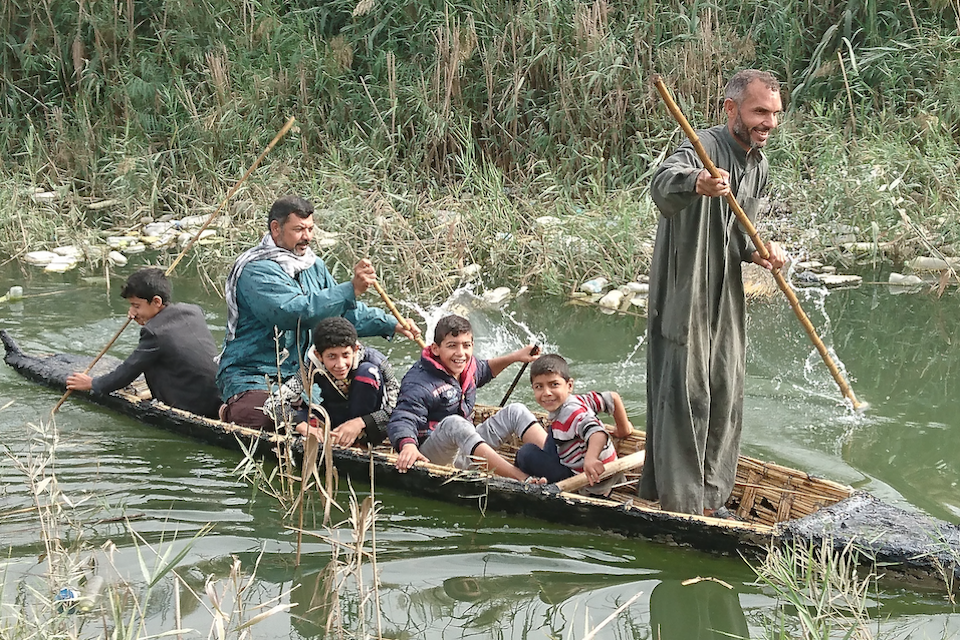

Safina© An Ark for Iraq project; Cane Canoe on the water at a boat workshop.
Launched in 2016, DCMS’s flagship Cultural Protection Fund (CPF) is delivered in partnership with the British Council, who oversee programme delivery and development. The fund aims to help to create sustainable opportunities for economic and social development through building local capacity to foster, safeguard and promote cultural heritage, particularly in regions affected by conflict. It currently operates across the Middle East, Africa and Asia.
Since 2016, the Cultural Protection Fund has given grants of over £50 million to 159 projects to protect cultural heritage in 19 countries, but the need for our work has never been greater. Last year alone we received funding requests of almost 20 times the budget for our entire current programme.
Stephanie Grant, Director of the Cultural Protection Fund at the British Council (2024)
Recognising the urgent need to protect cultural heritage from climate change, in 2020 DCMS and the British Council launched a new climate programme as part of the CPF, the Disaster and Climate Change Mitigation funding round. Funds were awarded to 5 global heritage projects that respond to the risk of climate change to heritage in East Africa. The projects aimed to advance regional cultural protection by supporting knowledge exchange between experts and empowering local organisations with the skills to protect their cultural heritage.
In May 2024, the CPF announced funding of 22 new projects, across 10 countries, with a funding total of over £2 million. The projects will protect cultural heritage at risk from the effects of conflict and/or climate change. The funding will support projects across Syria, Iraq, Kenya, Sudan, Ethiopia, Occupied Palestinian Territories, Uganda, Tanzania and for the first time, Pakistan and Nepal, with the latter 2 being new additions to the CPF’s country portfolio.
UNESCO HeritageCultural EmergencyProtection FundFunds
The ICHP Programme has an annual contingency to contribute directly to emergency support for at-risk/damaged cultural heritage during humanitarian crises. ForOver example, the last four years, The ICHP Programme contributedhas 2made sumsa (£200,000significant andcontribution £550,000)of £1,500,000 to the UNESCO cultural protection funds. These are the Heritage Emergency Funds, the UNESCO Fund overfor 2023the Protection of Cultural Property in the Event of Armed Conflict and 2024Response activities for Gaza, the UNESCO Special Account for Post Crisis Situations to aidrespond to the crisis in Ukraine, the UNESCO Special Account for the Protection of Cultural Property in respondingthe toEvent emergencyof requestsArmed Conflict and the Fund for assistancethe Protection of Cultural Property in ODAthe eligibleEvent countries.of InArmed 2020,Conflict. UNESCO is responsible for the delivery of said emergency response projects.
Historic England: UK-Ukraine 100 Year Partnership: Cultural Heritage Project
In 2025, ICHP Programmepartnered alsowith contributedHistoric emergencyEngland to provide funding viaup theto Prince£800,000 Clausfor Funda four year project to enablefacilitate atraining first-responseand interventioneducational followingexchanges for cultural professionals for the explosionprotection, inpreservation Beirutand restoration of Ukrainian cultural heritage that has been endangered by Russian aggression. This project will be delivered in 2020.consultation with key Ukrainian stakeholders to ensure it aligns with the needs of the sector.
Arts and Humanities Research Council: Cultural Heritage and Climate Programme 2020-20252020-2026
In 2020, DCMS partnered with the Arts and Humanities Research Council’s Global Challenges Fund to run a pilot urgency grants scheme. The groundbreaking scheme centred on projects exploring how developing countries respond to the challenges for cultural heritage resulting from environmental disasters and climate change.
Originating from a cohort of 9 projects, the programme has generated research outputs and policy impacts, through 30 partners, for communities across 12 ODA countries, including Nigeria, Tanzania, Yemen, Zimbabwe, India, Sri Lanka, Turkey and Brazil. A future expansive phase will create a global Research Observatory, coordinating cultural heritage voices in international climate discussions.
In 2024, the Cultural Heritage and Climate Programme funded five research projects to mitigate climate change and build capacity for climate action. The projects will examine cultural heritage and environmental policies in countries including:
- India
- Indonesia
- Jordan
- Brazil
This programme is continuing in 2025 and 2026 to fund new networks of UK institutions working with European partners, in-country partners in ODA countries, community practitioners, researchers, and policymakers for 12 months. These grants will help researchers and policymakers to explore opportunities to enhance cultural heritage and climate change engagement and policy development.
Organization for Security and Co-operation in Europe: Ukrainian Heritage Crime TaskforceTask Force
EarlySince 2024, the ICHP Programmeprogramme has contributed 200,000£500,000 Eurosto toward the OSCE’sOrganization projectfor toSecurity createand aCo-operation newin nationalEurope (OSCE) towards the establishment of a Heritage Crime Task Force in Ukraine. TheThis project has 2enhanced overarching objectives:
ToenhanceUkraineInenhances2025,itsthisnationalworkcapacityexpanded into the Mediterranean region in response tocombattheheritageincreasecrimes,in the risk of cultural propertytraffickingdestruction anditshighercapacityvolumes of trafficking across the Mediterranean due toprosecuteconflictperpetratorsinthroughGaza, Lebanon and Yemen, as well as thecreationrecentandeventsdirectintrainingSyria.ofICHPasupportmulti-agency,fornationalthisheritageworkcrimecontinuesunit.in 2026.
VictoriaBlue andShield AlbertInternational Museum(BSI) Culturesupport infor Crisisthe Programme:development capacityand buildingstrengthening forof heritage professionals in the CaucasusBlue Shield
InOver Aprilthe 2023,next DCMSfour andyears, the V&AICHP signedProgramme ais Memorandumproviding ofa Understandingsmall grant to supportBlue theShield preservationInternational of(BSI) culturalto heritagesupport inthe ODAorganisation’s eligiblecapacity countries,building withand adevelopment. focusIt onwill capacityhelp buildingBSI acrossto heritagestrengthen institutionsits inoperational theprogram Caucasus,to promotingprotect resiliencecultural againstheritage theglobally, threatespecially posedin byOfficial Russia.
UnderDevelopment thisAssistance MoU,(ODA) DCMSrecipient hascountries. contributedThe fundingproject aims to 3enhance projects:
ABSI’sconferenceabilitytitledto‘CollaborationrespondintoTimescrises,ofpromoteCrisis:thePreserving1954NaturalHague Convention, andCulturalfosterHeritage’aatmulti-donorThefundingGeorgianplatformNationalfor.MuseumThis(26-29grantAprilis2023),criticaldeliveredforinenablingcollaborationBSIwithtoThegrowGeorgianitsNationalcentralMuseum,team,thesupportCentrenationalforcommittees,StudyPromotiondeliveroffast,NaturaleffectiveandresponsesCulturaltoHeritageheritage-relatedofcrisesGeorgia,worldwide.
Blue theShield RathgenInternational Research(BSI) LaboratoryUkraine withProsecutorial theSupport Nationalfor Museums Berlin and the Prussian Cultural Heritage Foundation.Investigations
AThe 5-dayICHP trainingProgramme coursehas (8-12contributed Julyto 2024)Blue forShield museumInternational and(BSI)’s heritage12-month professionalsinitiative inaimed Tbilisi,at Georgia,bolstering toUkrainian developprosecutorial Georgianefforts heritagein professionals’the understandingcrimes ofcommitted emergencyagainst planningUkrainian andcultural developheritage robustduring salvagethe andongoing emergencyconflict planswith forRussia. theirThis respectiveproject organisationsis specificallyenhancing aroundthe naturalcapacity disastersof suchUkrainian asOffices floodsof andthe earthquakesProsecutor andGeneral risksat national and threatsoblast fromlevels conflict.
Theby translationproviding ofspecialised thetraining ICCROMin Firstorganisational Aidplanning, todeveloping Culturalanalytical Heritagecapabilities infor Timescultural ofheritage Crisisdestruction -events, Handbookand (2018)offering andassistance thewith ICCROMsite Firstexploitation Aidand toevidence Culturalcollection. HeritageUltimately, inthis Timessupport ofwill Crisisstrengthen -investigations Toolkitand (2018)prosecutions fromof Englishheritage-related tocrimes Armenian.
Readwithin moreUkraine aboutand theother programmejurisdictions.
United Nations Office on Drugs and Crime (UNODC)
In September 2024, the ICHP launched a programme with UNODC to strengthen investigation and prosecution capacities against cultural heritage trafficking linked to conflict zones in the Middle East. This project will conclude in March 2026. The project serves to:
- increase understanding and awareness among key Egyptian and Lebanese stakeholders to prevent and counter the dynamic of trafficking in cultural heritage linked to regional conflicts;
- improve follow-up investigation and prosecution capacities when it comes to cultural heritage trafficking in Egypt and Lebanon; and
- facilitate international cooperation in investigating and prosecuting cultural heritage trafficking with Egyptian and Lebanese stakeholders.
Read more on UNODC’s mandate on trafficking in cultural property.
UNESCO Civil-Military Regional Workshops on the Protection of Cultural Property
In October 2024, the ICHP funded UNESCO to deliver two sub-regional civil military workshops to enable the national armed forces and civilian authorities of both the Sahel and South America to master the relevant international legal obligations, in particular those stipulated in the 1954 Hague Convention and its two Protocols (1954 and 1999), with regard to the protection of cultural property in the event of armed conflict.
These lessons will be enriched by examples of military best practice applicable during the various phases of an emergency operation, with the aim that Armed Forces in the region establish permanent military units for the protection of cultural property as well as regular training organised by their Ministries of Defence.
Read more on UNESCO’s previous civil-military training in the Baltic region.
Culture conventions ratified by the UK
1954 Hague Convention for the Protection of Cultural Property in the Event of Armed Conflict and its Two Protocols (1954 & 1999) - Ratified in 2017
The UNESCO 1970 Convention on the Means of Prohibiting and Preventing the Illicit Import, Export and Transfer of Ownership of Cultural Property - Accepted in 2002
The 1972 Convention concerning the Protection of the World Cultural and Natural Heritage - Ratified in 1984
The 2003 Convention for the Safeguarding of the Intangible Cultural Heritage - Ratified in 2024
The 2005 Convention on the Protection and Promotion of the Diversity of Cultural Expressions - Ratified in 2007
Links and guidance
Guidance on the implementation of the 1954 Hague Convention on the Protection of Cultural Property in the Event of Armed Conflict
Global Britain in a Competitive Age: the Integrated Review of Security, Defence, Development and Foreign Policy
UK Approach to Protection of Civilians in Armed Conflict
Wilton Park, Cultural Heritage Protection, Development and Diplomacy: International Approaches
Institute of Development Studies. Lessons learned on cultural heritage protection in conflict and protracted crisis. Kelly, L. (2021). K4D Helpdesk Report. DOI: 10.19088/K4D.2021.068
The UK’s Adaptation Communication to the United Nations Framework Convention on Climate Change (UNFCCC) 2020
UNESCO-UK
-
1st Report: Biocultural Heritage: Linking Nature and Culture
-
2nd Report: Bridging the Gaps: Cultural Heritage for Climate Action - the Brief Report
Stay up-to-date
Follow DCMS social media and tag us using #DCMSCulturalProtection.
Contact us at culturalprotection@dcms.gov.uk