Tick-borne encephalitis: epidemiology, diagnosis and prevention
Advice for health professionals on tick-borne encephalitis (TBE) including symptoms, diagnosis and epidemiology.
Tick-borne encephalitis (TBE) is a viral infection thatcaused causesby minimalthe orthe notick-borne symptomsencephalitis invirus (TBEV) which belongs to the majorityFlavivirus genus. TBE is usually transmitted to humans through the bite of an infected tick. Although infection can occur through consumption of infected unpasteurised dairy products.
Infection with TBEV causes no symptoms or only mild symptoms in most people. In rare cases, theTBEV viruscauses canan attackacute infection of the central nervous system andleading to meningitis or encephalitis or other neurological syndromes. This can occasionally result in long-term neurological symptoms orand (veryin rarely)severe death.cases TBEdeath.
A related virus, louping ill virus (LIV) is closely related to TBEV), and causes louping ill disease in sheep, although human infections can occur with a similar syndrome to infection with TBEV. Together TBEV and LIV belong to the tick-borne encephalitis complex.
TBEV is endemic in ticks and animals in rural and forested parts of Europe, Russia, China and Japan. In recent years, TBE has become an increasing public health concern due to the expansion of endemic areas. In the UK, a membersmall number of locally acquired cases have been reported since 2019.
There is no specific antiviral treatment for TBE. Cases with neurological symptoms require hospitalisation and supportive care.
Preventing tick bites is the genusmain Flavivirus.way to reduce the risk of infection. A vaccine against TBEV is available and is recommended for people travelling to areas where the virus is endemic and exposure risk is high.
Epidemiology
TBEV has 5a widespread geographic distribution across much of mainland Europe, with substantial increase in both case numbers and the extent of affected areas in the past 30 years. Areas of higher risk reflect the preferred habitat of infected ticks, which are mainly rural and forested environments.
The main subtypes,vectors for TBEV are Ixodes ricinus ticks which are widespread in the UK, and Ixodes persulcatus ticks which are not native to the UK but can be found in Europe and northern Asia, including China and Japan. The main reservoir hosts for TBEV are small mammals, particularly rodents (such as voles, mice) and insectivores (such as shrews). Other animals contribute indirectly to virus circulation by enabling tick multiplication, including wild and domestic mammals, such as hares, deer, wild boar, sheep, cattle and goats.
TBEV has 5 closely related:related subtypes:
European,European subtype - transmitted by Ixodes ricinus ticks,andFar-Eastern,Far-Eastern subtype - transmitted mainly by Ixodes persulcatus,andit is endemic in far-eastern Russia and in forested regions of China and JapanSiberian,Siberian subtype - transmitted by Ixodes persulcatus,andit is endemic inUralsthe Ural region,SiberiaSiberia,andtheBaikalian subtype - a recently recognisedBaikaliansubtypesubtype,transmittedtransmittedpersulcatus,persulcatus and found in East SiberiatheHimalayan subtype- a recently recognisedHimalayansubtypesubtype,, for which Marmota himalayana (Himalayan marmot) is the primary reservoir host,andidentifiedfoundonin
The European subtype is generally associated with a milder disease.
Seedisease Ixodescompared ricinuswith distributionother map.TBEV subtypes.
UK epidemiology
SeeIn Ixodesthe persulcatusUK, distributionTBEV map.
Competent(European reservoirsubtype) hostswas offirst detected in ticks in 2019. To date, TBEV areinfected mainlyticks smallhave rodentsbeen (voles,detected mice)in Thetford Forest, the Hampshire-Dorset border and insectivoresparts (shrews).of Otherthe animalsNorth supportYorkshire virusMoors.
The circulationfirst indirectlyprobable byhuman enablingcase of locally acquired TBE was diagnosed in 2019 following a tick multiplication.bite Thesein includethe wildNew andForest. domesticAs mammals,of especiallyApril hares,2026, deer,there wildhave boar,been sheep,6 cattleUK acquired cases reported.
Figure 1. Map showing location of confirmed and goats.probable TBE cases in the UK
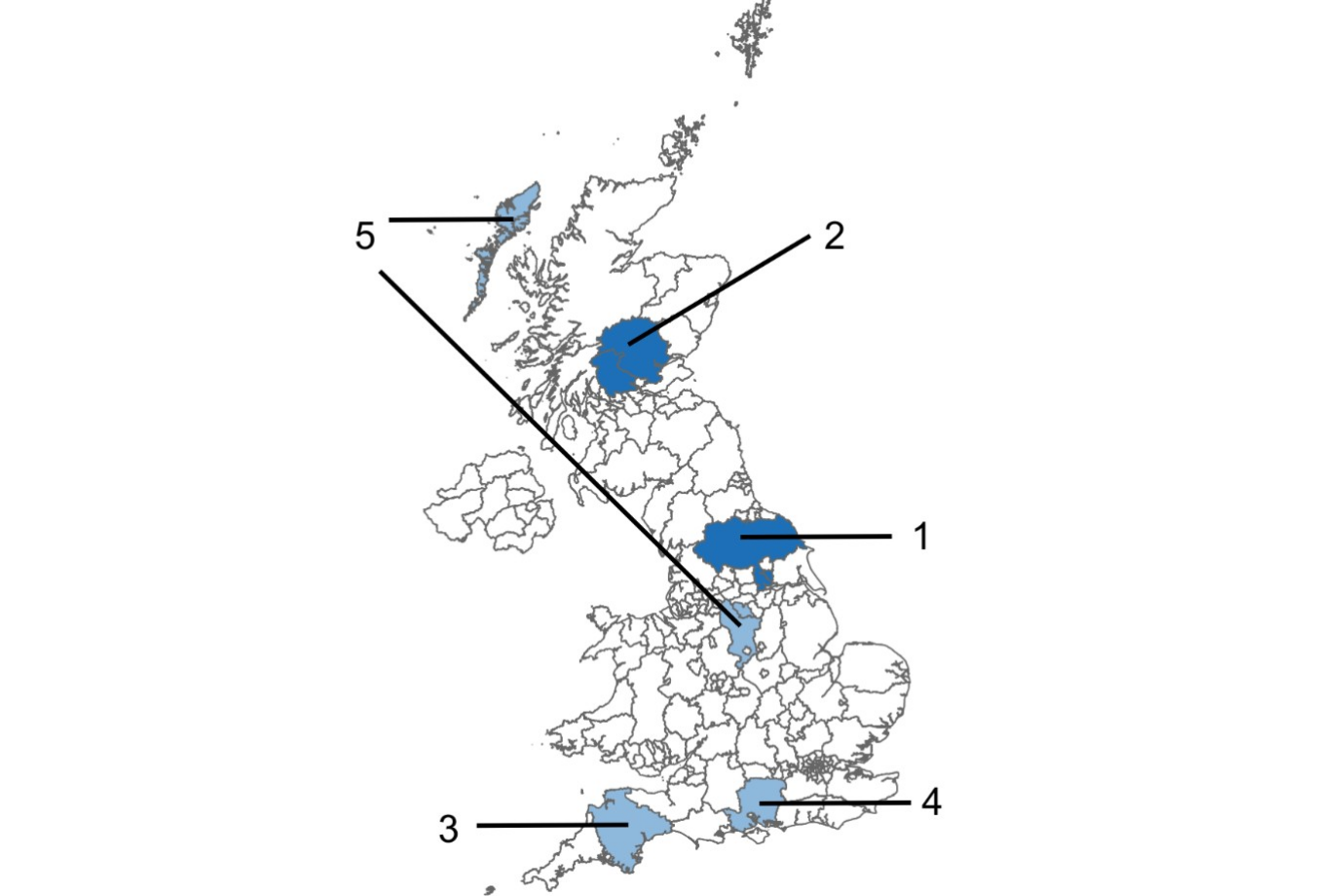
Map shows:
- One confirmed TBE complex case acquired in the North Yorkshire Moors
- One confirmed TBE complex case acquired around the Loch Earn area in Scotland
- One probable case acquired in Dartmoor
- Two probable complex cases acquired in Hampshire
- One probable TBE complex case acquired in either the Peak District, South Yorkshire or Na h-Eileanan Siar (outer Hebrides)
Transmission
TBEV is is normally transmitted by the bite of an infected tick.
In humans,Following diseaseinfection humans are considered ‘dead end’ hosts as they do not develop sufficient levels of viraemia to enable onward transmission of virus to ticks. Infection can also beoccur acquiredthrough bythe consumption of unpasteurised milk or milkdairy products from infected animals, althoughparticularly cows, sheep or goats however this isroute veryof transmission is rare.
TBEV is not directly transmitted from person to person. ThereIsolated havecases been case reports of transmission through organ transplants,transplantation, blood transfusion, via the transplacental routetransmission and breastfeeding.through breastfeeding have been reported. Infection has also followedoccurred following laboratory sharps injuries.
Symptoms
The average incubation period of TBE is 7 days, but may be up to 28 days. The incubation period for foodborne infection is usually shorter, around 4 days.
Approximately two-thirds of human TBE virus infections are asymptomatic. In symptomatic cases, it is often biphasic, with an initial viraemic phase lasting approximately 5 days (range 2 to 10), and is associated with non-specific symptoms (fever, fatigue, headache, myalgia, nausea).
This phase is usually followed by an asymptomatic interval and apparent recovery, lasting 7 days (range 1 to 33). The second phase begins approximately 7 days after initial resolution of symptoms (range 1 to 33 days) and involves the central nervous system. Typical presentations are meningitis, meningoencephalitis, myelitis, paralysis, or radiculitis.
The European subtype is associated with milder disease, with 2020% to 30% of patients experiencing the second phase, severe neurological sequelae in up to 10% of patients, and an overall mortality of 0.50.5% to 2%. In children, the second phase of illness is usually limited to meningitis, while adults older than 40 years are at increased risk of developing encephalitis. There is a higher likelihood of long-lasting sequelae, and a higher mortality, in those over the age of 60 years, the immunocompromised, or those with significant co-morbidities.
Acute encephalitis of any cause is a notifiable disease and should be notified to the UK Health Security Agency (UKHSA) if suspected.
Anyone with flu-like symptoms following a tick bite should contact their GP ortheir GP or call NHS 111.
Laboratory diagnosis
TestingAcute isencephalitis doneof by the UKHSA Rare and imported pathogens laboratory (RIPL). If TBE is suspected, the referring clinician should contact a cliniciannotifiable atdisease RIPL to discuss the case to ensure that the correct samples are sent for testing.
Rare and imported pathogens laboratory (RIPL)
UK Health Security AgencyManor Farm RoadPorton DownWiltshireSP4 0JG
Email ripl@ukhsa.gov.uk
Telephone 01980 612348 (available 9am to 5pm, Monday to Friday)
DX address DX 6930400, Salisbury 92 SP
TBEV is a notifiable organism,. andManaging youclinicians should notify yourtheir local health protection team ifwhen detected.
Risksthey forsuspect UKa travellersclinical case.
Diagnosis
IfIn you are travelling outside the UK, checkclinicians whetherwho yoususpect are visiting a placepatient wheremay have TBE, isor present.who TBEV-Eurhave isa endemicpatient inwith ruralundiagnosed andencephalitis forestedshould areasseek ofadvice central,from easternthe andUKHSA northernImported Europe.Fever TheService. incidence
Testing variesis considerably,performed withby highestthe UKHSA Rare ratesand reportedimported frompathogens Lithuania,laboratory Latvia,(RIPL). Estonia,In Sloveniapatients andwho Czechia.
Tickshave carryingdeveloped theneurological virussymptoms, canTBEV beIgM foundand/or inIgG manyantibodies partsare ofusually Europedetectable andin Asia.
Checkserum, whetherexcept youin arethose visitingwho aare placeimmunocompromised. whereFor TBEthis isreason, present.serum Youshould canbe looksubmitted upin the countryfirst you’reinstance. visitingRIPL onwill thethen TravelHealthProrequest countrycerebrospinal informationfluid pages,(CSF) orif speakfurther toanalysis ais travel clinic for more information.required.
ConsiderPCR havingcan abe courseused ofto vaccinedetect against TBEV beforeor youLIV travel.RNA, Youenabling canspecific getdiagnosis moreof informationeither on the TBEVTBE vaccineor fromlouping aill. travelHowever, clinic,viral orRNA fromis youronly GPtransiently practicepresent ifin itCSF providesand amay travelno vaccinationlonger service.be Alwaysdetectable practiseby tick avoidance.
Risk in the UK
Intime 2019,neurological TBEVsymptoms (Europeanappear. subtype)As wasa detectedresult, indiagnosis amay smallsometimes numberrely ofsolely tickson inserology. ThetfordIn Forestsuch andcases, anwhere areaantibody onresults thecannot borderdistinguish between Hampshire and Dorset. Subsequently, TBEV-positive ticksand haveLIV, beenthe founddiagnosis inmay Northbe Yorkshire.reported Furtheras worka isprobable under way to identify the distribution of TBEV‘TBE-infected tickcomplex’ populations in England.infection.
InClinicians Julyare 2019,encouraged ato Europeandiscuss visitorall becamesuspected illcases afterwith beingRIPL bittento byensure athat tickappropriate insamples theare Newsubmitted Forestand area.the Thiscorrect wasdiagnostic consideredpathway tois befollowed.
Rare aand highlyimported probablepathogens caselaboratory of(RIPL)
UK tick-borneHealth encephalitis,Security basedAgency
Manor onFarm serologicalRoad
Porton testing.Down
Wiltshire
SP4 0JG
InEmail ripl@ukhsa.gov.uk
Telephone July01980 2020,612348 a(available second9am probableto case5pm, ofMonday TBEto infectionFriday)
DX wasaddress diagnosedDX in6930400, aSalisbury patient92 fromSP
Treatment
There Hampshire,is againno basedspecific ontreatment serologicalfor testing.TBE.
Prevention
InTick Septemberbite 2022,avoidance aand thirdregular case,checking confirmedfor positiveand byremoval polymeraseof chainticks reactionare (PCR),the wasmost diagnosedimportant inpreventive anmeasures individualfor people who isare likelyplanning to havevisit acquiredareas infectionat inhigh therisk Loch Earn area of Scotland.
Intick Octoberbites 2022,either a fourth case, also confirmed positive by PCR, was diagnosed in anthe individualUK whoor reportedabroad. recentThis exposureincludes tostaying tickson inpaths theand Northavoiding Yorkshirelong Moorsgrass inwhen England.
Towalking date,outdoors, allusing otherinsect casesrepellent, ofwearing TBEVlong infectionsleeved reportedshirts inand thetrousers UKand haveregularly beenchecking acquiredfor throughticks travelon toskin high-riskand areas abroad.clothing.
TheUKHSA riskhas fromproduced TBEVresources isto currentlysupport assessedawareness asraising veryinitiatives. lowA forvaccine theis generalavailable public, and low for high-riskpeople groupsvisiting (suchhigh asrisk thoseareas. living,Further workinginformation oron visiting affected areas).
Lyme disease remains the mostTBE commonlyvaccine acquiredcan tick-bornebe infectionfound acquired in thechapter UK31 andof itthe isGreen important to be tick aware when spending time outdoors.Book
Tick
Main resourcestick and surveillance
- Tick
toolkitstoolkit and tick awareness materials
- Tick
onsurveillance howscheme
- NaTHNaC
totick-borne takeencephalitis partfactsheet
- One
inHealth thevector-borne tickdisease surveillance scheme
For
- Ixodes
furtherricinus information,distribution seemap
- Ixodes
NaTHNaCpersulcatus factsheetdistribution map.
Main resourcestick and surveillance
- Tick
toolkitstoolkit and tick awareness materials - Tick
onsurveillancehowscheme - NaTHNaC
totick-bornetakeencephalitispartfactsheet - One
inHealththevector-bornetickdisease surveillanceschemeFor - Ixodes
furtherricinusinformation,distributionseemap - Ixodes
NaTHNaCpersulcatusfactsheetdistribution map.