New Defence Medical Research Strategy published
New agreement will expand military medical education, training and professional development opportunities.
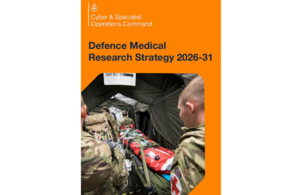
The Defence Medical Command (DMedC) is calling on partners in Defence, academia, business and research across the UK to work with it to drive forward innovation in military healthcare and medicine in its new research strategy .
Providing a clear, unified direction for Defence medical research for years to come, the strategy focuses effort where it matters most - supporting personnel, improving patient care, and strengthening operational readiness.
Working collaboratively with partners such as the Defence Science and Technology Laboratory, UK Defence Innovation, academic institutions and industry who provide specialist expertise and infrastructure, is central to the strategy’s approach.
Philip Woodgate, Director of Research in Defence Medical, said:
The global geopolitical context has changed significantly since the previous strategy was published in 2021.Last year’s Strategic Defence Review highlighted the need for the UK’s Armed Forces to be prepared for large scale combat operations.
This strategy is designed to meet that challenge head on, ensuring research and development is focused, relevant and aligned to operational needs to continually improve medical capability whether in peace or wartime. And we are calling on our industrial, academic and research partners across Defence and the civilian sector to work with us.
This strategy marks a significant shift in Defence Medical’s approach:
-
From counterinsurgency to Large Scale Combat Operation:
Research priorities are now framed around the demands of high-intensity, large-scale conflict. -
Stronger emphasis on collaboration:
The strategy recognises that Defence Medical Command cannot deliver the required scale of innovation alone and must work across Defence, academia, industry, and allies. -
More targeted direction:
It acts as the single demand signal for Defence medical research, aligning effort and investment across multiple organisations.
Translating into tangible benefits, including:
- Improved deployability of personnel
- Lives saved on the battlefield
- Faster recovery and return to duty
- Better long-term health outcomes
While success can be measured through increased research activity, funding, and collaboration, the most important outcome is real-world impact.
By 2031, success will mean:
- Research directly shaping policy and clinical practice
- Improved quality of care for patients
- A force better prepared to meet the medical demands of LSCO
What this means for Defence Medical personnel
All Defence Medical Command staff and partners have a role to play.
- Use the strategy as the Defence medical demand signal when engaging with partners
- Ensure we are aligned and speaking with one voice
Doing so effectively will contribute to shaping future priorities as the strategy is a living document.
The Defence Medical Research Strategy which has been shaped by extensive engagement with the Defence Medical Command community, with over 400 individual inputs to identify real-world capability and knowledge gaps can be accessed here: