England's only natural world heritage site has a birthday
The Jurassic Coast marks 25 years old as England's only natural world heritage site. Work continues to protect the coast's geology and wildlife
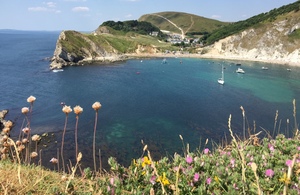
The renowned features of Lulworth Cove very much part of the Jurassic Coast. Photo: Sam Scriven
A range of organisations working to protect the Jurassic Coast gathered at Lulworth Cove to celebrate the 25th anniversary of the Dorset and East Devon UNESCO World Heritage Site on 14 September.
The event, hosted by the Lulworth Estate, marked 25 years of partnership, conservation, and research along one of the world’s most remarkable coastlines, celebrating not only outstanding geology, but 25 years of achievement. It demonstrates how landscape-scale conservation and strong partnership working can deliver lasting benefits for nature and people.
The Jurassic Coast stretches 95 miles from Exmouth in Devon to Studland Bay in Dorset, with its rocks spanning almost 185 million years of Earth’s history. This record earned global recognition in 2001, when it became, and remains, England’s only natural World Heritage Site.
Today, the site attracts 14 million visitors annually, inspiring people through its iconic landscapes, geology, and rich cultural history. From towering cliffs and shingle beaches to the renowned features of Lulworth Cove and Old Harry’s rocks, the coastline has long been celebrated in art, literature, and film. This incredible coastline forms part of the King Charles III England Coast Path which, when complete, will be the longest managed coast path in the world at 2,700 miles long.
The importance of the designation extends well beyond geology. Its varied protected landscapes sustain unique habitats, supporting rare species such as the early spider-orchid and Morris’s wainscot moth.
Dave Slater, South West regional director for Natural England, said:
Natural England has played a key role in protecting and managing the Jurassic Coast, working alongside local partners to safeguard its geology and wildlife, supporting long-term conservation. This extraordinary record of 185 million years of Earth’s history has a remarkable ability to connect people with nature and the history of our planet.
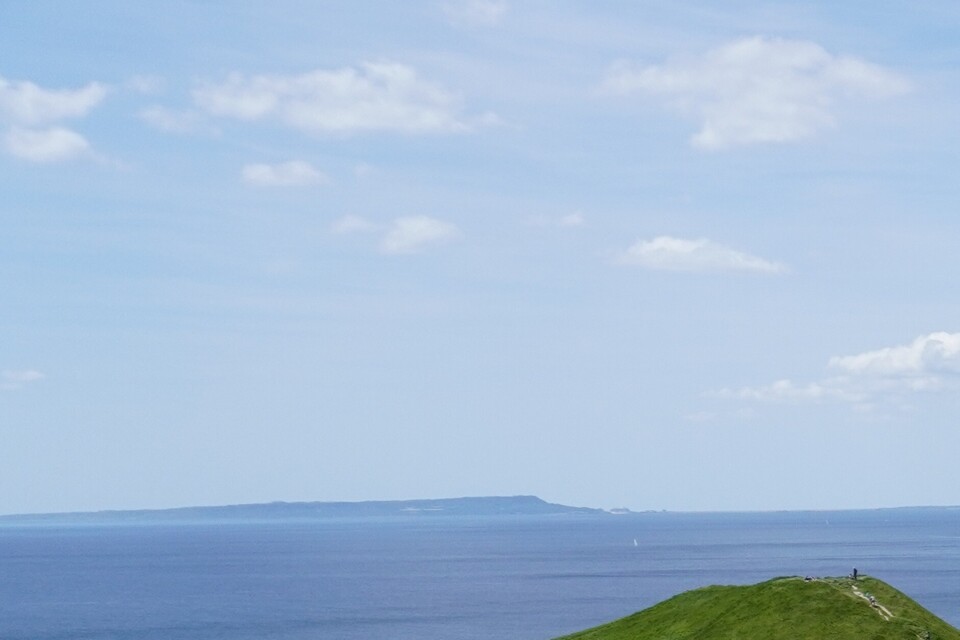
Natural England and partners continue to protect the coast's geology and wildlife, tackle climate change, and support education and sustainable tourism. Photo: Rhiannon Rees
For more than 200 years, the Jurassic Coast has played a pivotal role in the development of geology and palaeontology. The site remains an outdoor laboratory for learning and research.
Anna Nsubuga, UK Ambassador and Permanent Delegate to UNESCO, said:
The Jurassic Coast shows what can be achieved when people come together around a shared commitment to an extraordinary place. I warmly congratulate everyone who has contributed to its success over the past 25 years and look forward to seeing what this partnership can achieve over the next 25.
Celebrations continue throughout the year, with beach cleans, walks and local artist events planned.
Councillor Richard Jefferies, of Devon County Council, said:
The Jurassic Coast is an extraordinary part of Devon’s natural heritage and identity, and this anniversary is an opportunity to celebrate everyone who has helped care for it over the past 25 years. Devon County Council is proud to work with our partners to ensure this remarkable coastline continues to inspire discovery and learning for generations to come.
Twenty-five years on, the work is far from over. Natural England and partners will continue to protect the coast’s geology and wildlife, tackle the growing threat of climate change, widen access to nature, and support education and sustainable tourism, ensuring this world-renowned coastline thrives for generations to come.
Background:
-
Photos are available to download from this WeTransfer link please credit the photographer Sam Scriven or Rhiannon Rees. They are also available from the Natural England press office.
-
Additional Quote:
Professor Richard Twitchett, a palaeontologist at the Natural History Museum, said:
“The rocks and fossils of the Jurassic Coast give us insights into some of the most important events in Earth history, from mass extinctions to climate change. We can track how animals and plants evolved and use the fossil record to test predictions of future change. The scientific value of the Jurassic Coast lies in its dynamic nature, revealing wonderful new fossils after each tide and storm.”
- A stakeholder event took place on 14 September at Lulworth Estate to celebrate the anniversary.
- Further information about events is available from Dorset Coast Forum: Celebrating 25 Years of the Jurassic Coast (Celebrating 25 Years of the Jurassic Coast - Dorset Coast Forum)
- Partners are UK National Commission for UNESCO; Devon County Council; Dorset Council and Natural England.
- Whilst commonly known as the Jurassic Coast, the UNESCO inscription refers to the site as the Dorset and East Devon Coast. Further details can be found on the UNESCO World Heritage Centre website.
- The site is managed through partnership working involving a wide range of stakeholders, coordinated by Dorset Council and Devon County Council.
- World Heritage status is not a statutory designation in the UK. Instead, the Jurassic Coast is protected through existing designations, including 13 Sites of Special Scientific Interest (SSSIs) and 2 National Landscapes (East Devon National Landscape and Dorset National Landscape), supported by other protected sites and local planning policies.
Contact us:
Journalists only: 0800 141 2743 or communications_se@environment-agency.gov.uk. Natural England shares a press office with the Environment Agency.